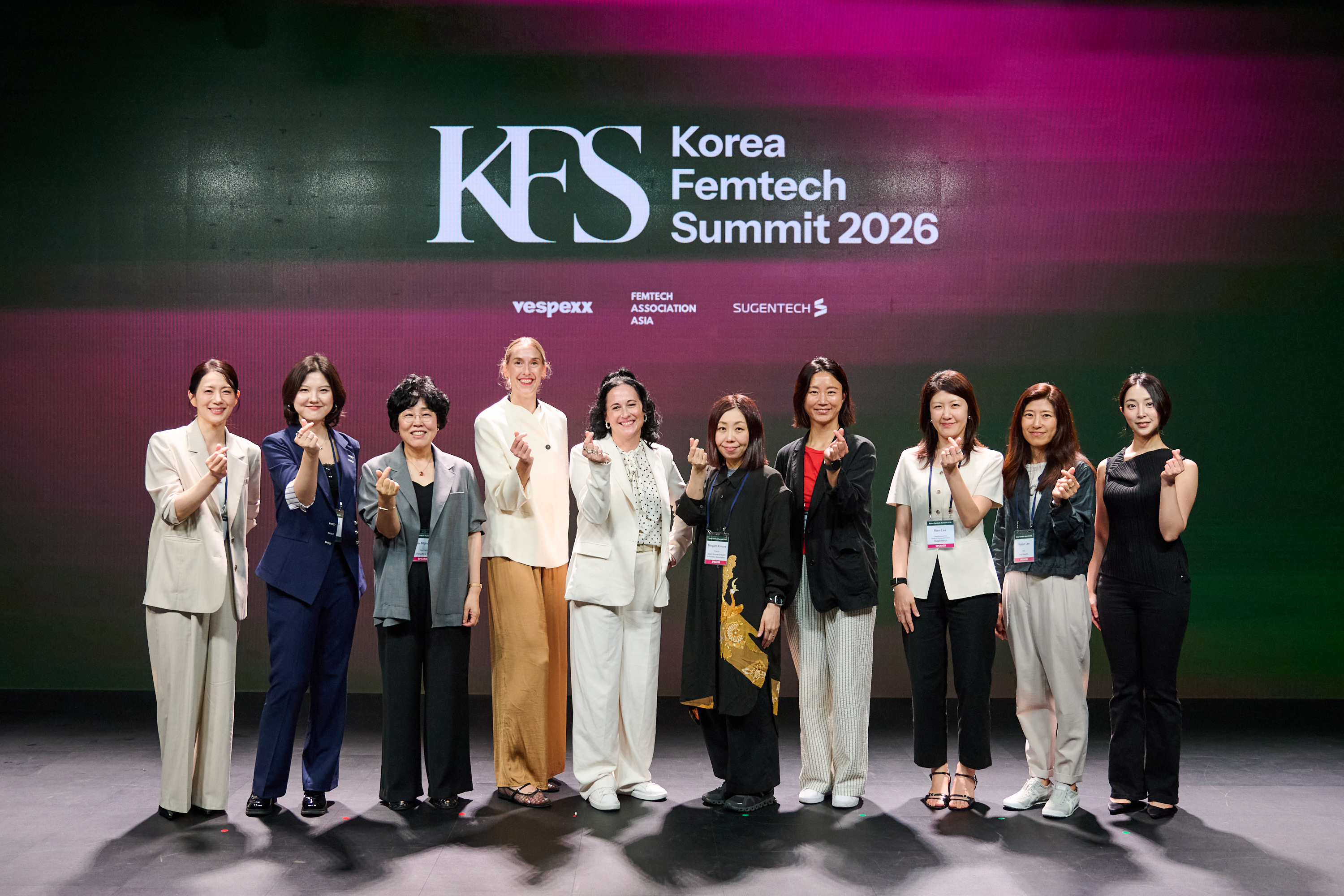
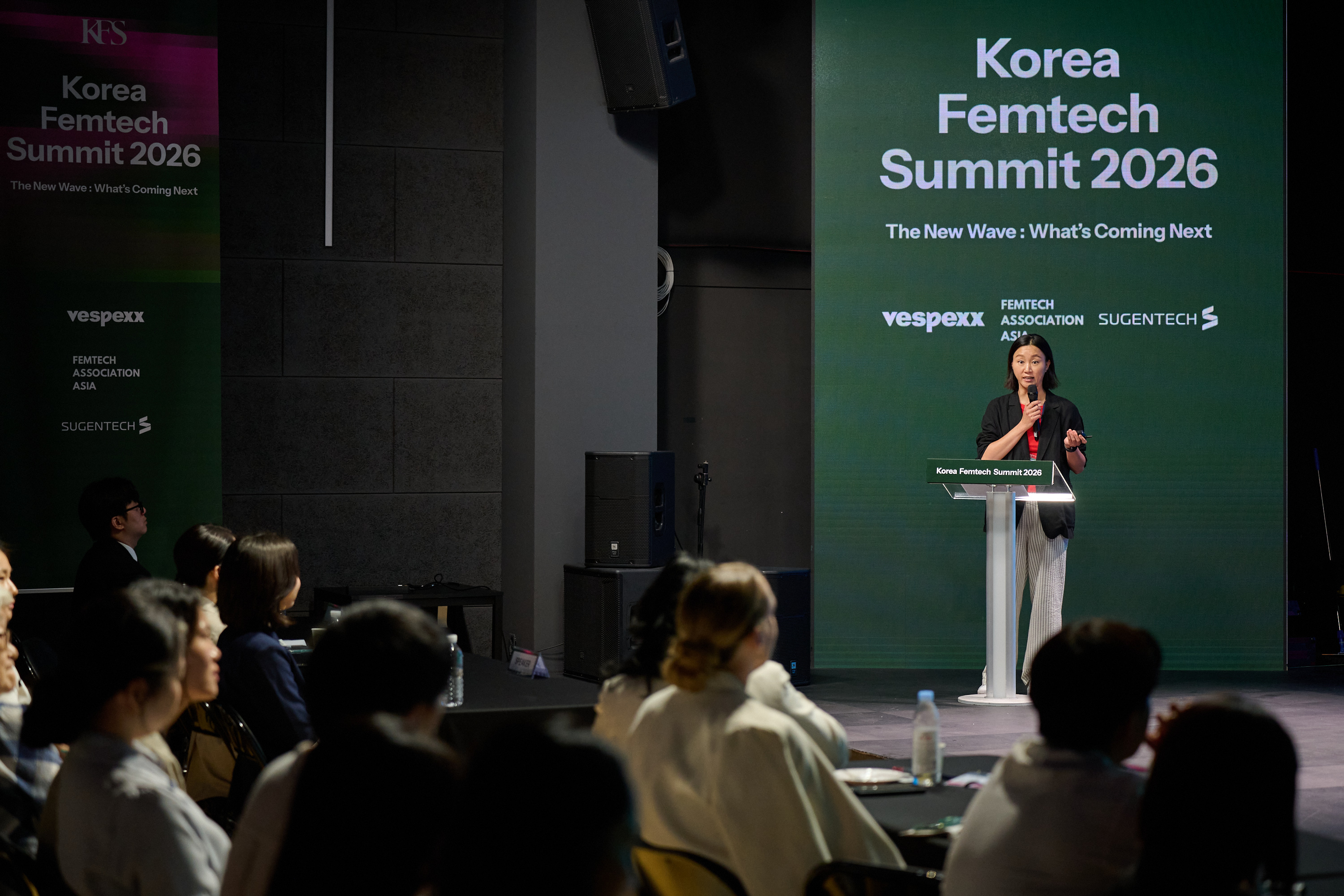
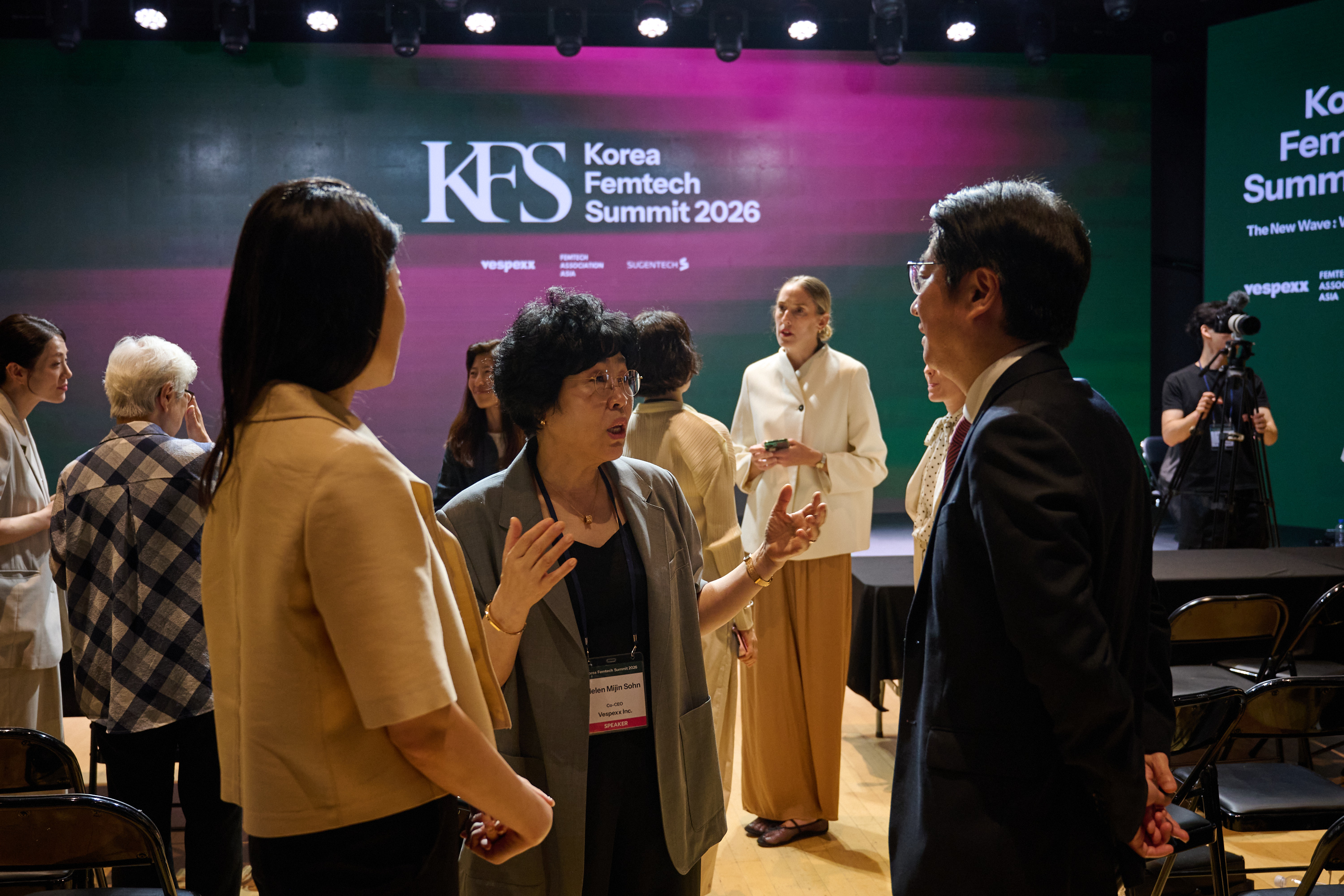
Vespexx hosted Korea Femtech Summit 2026, the first global femtech summit held in Korea, on June 30 at Seongam Art Hall in Seoul.
Korea Femtech Summit 2026: The First Wave
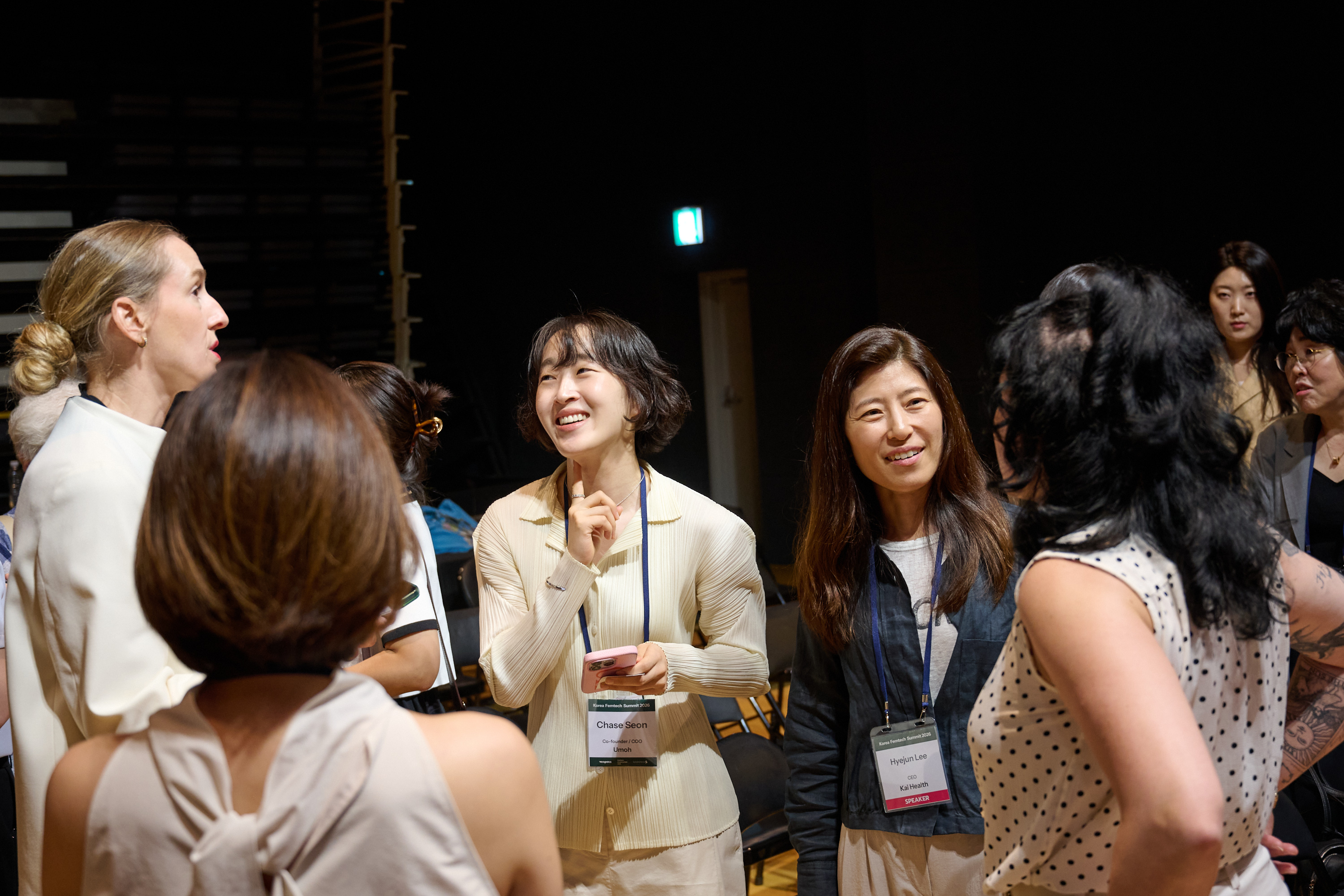
Some rooms tell you the future has already arrived. On June 30, Seongam Art Hall in Seoul was one of them. Vespexx hosted Korea Femtech Summit 2026, the first global femtech summit held in Korea, and brought together 80 founders, clinicians, investors, and women's health leaders from Korea, Japan, Canada, and beyond. Every seat was filled. Across ten speakers and eight sessions, one goal held the room together: to give women's health the attention it deserves, and to get there together. Here's how the day unfolded.
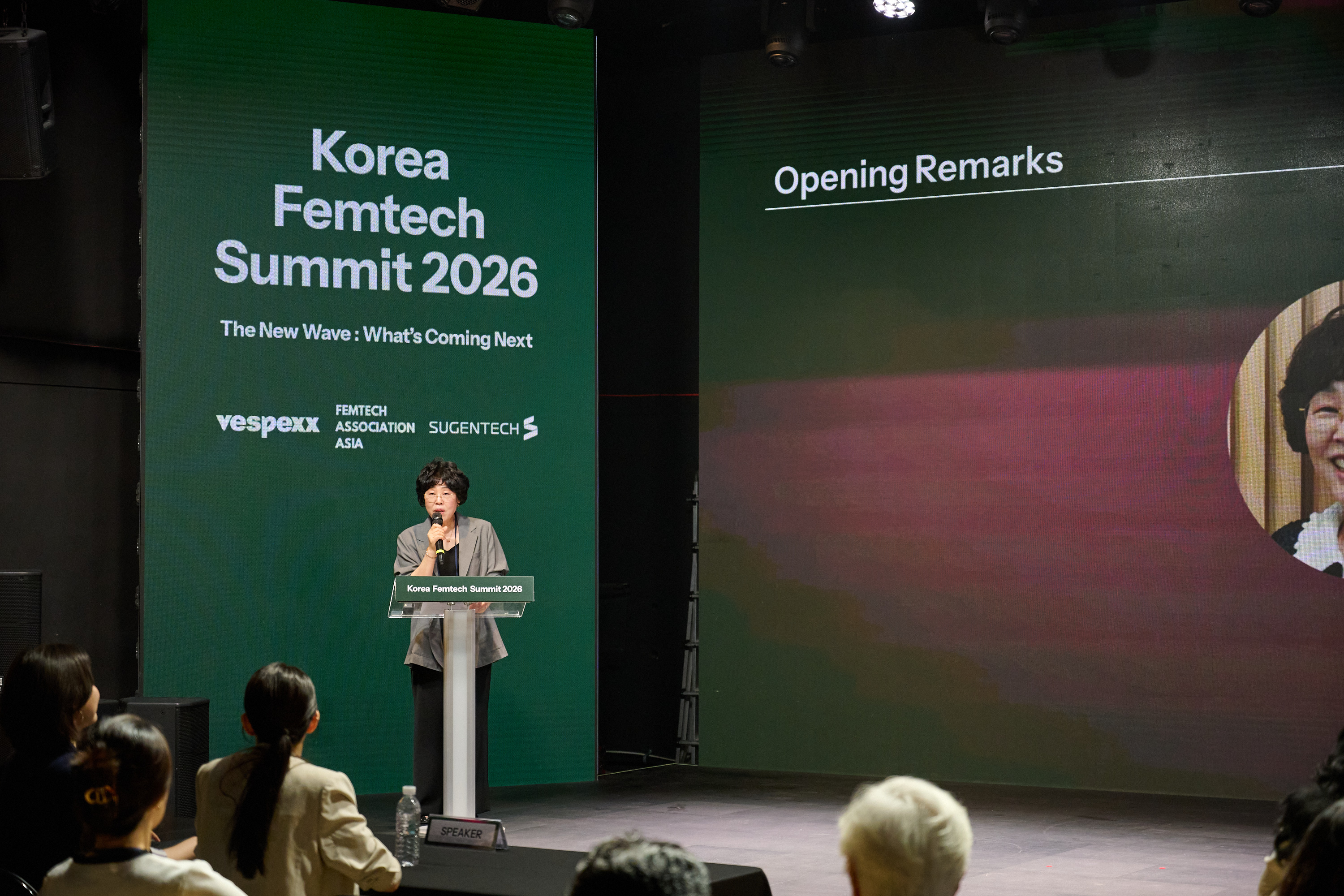
Opening: Why we're here
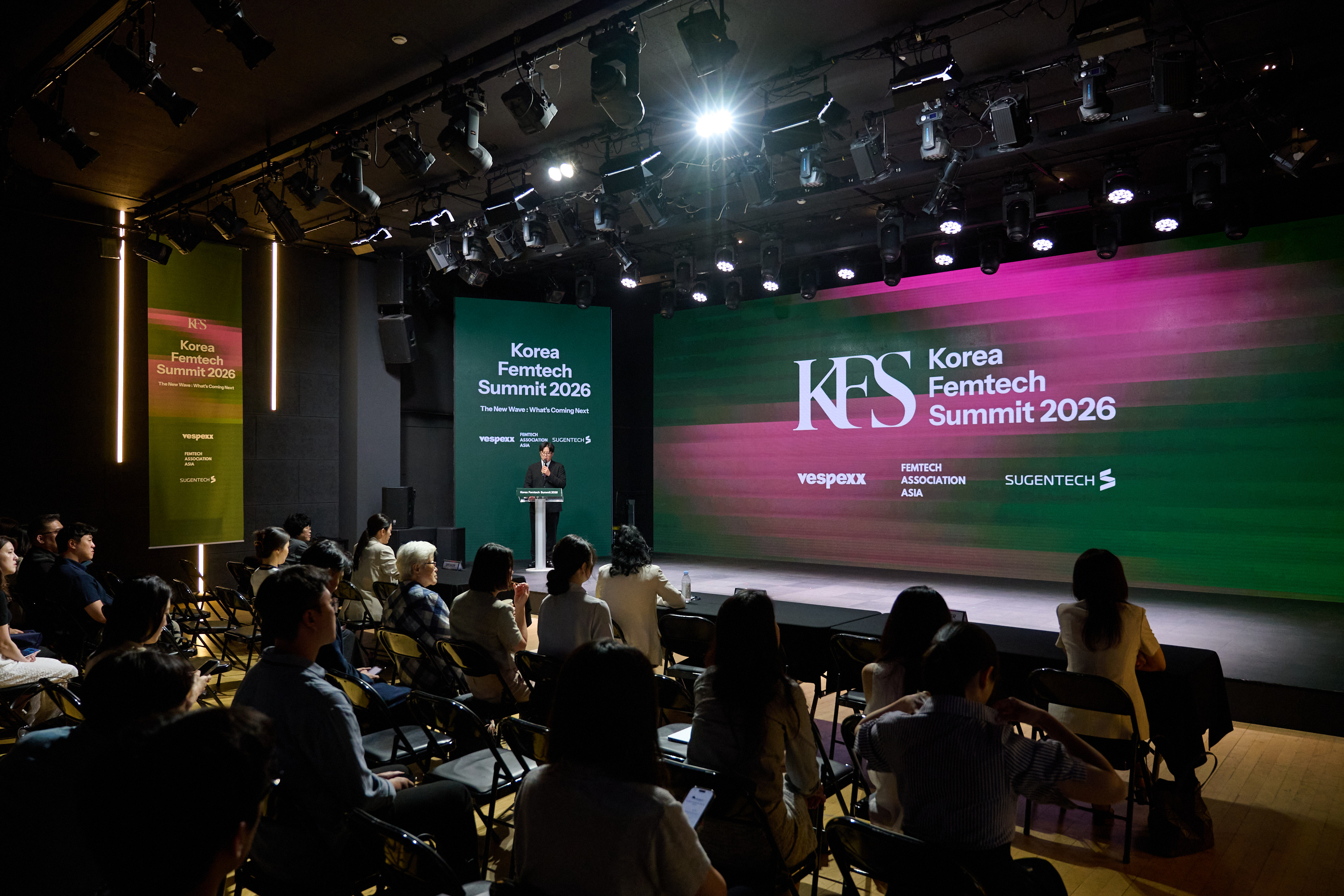
Vespexx Co-CEO Helen Mijin Sohn opened the summit as a researcher, scientist, and founder. Drawing on her years at the NIH and building Sugentech into a company exporting bio-femtech products to more than 50 countries, she named the pattern plainly: women's bodies have long been deprioritized in medicine and technology. With AI, precision medicine, wearables, and data platforms now converging, she argued we finally have the foundation to support women across their entire life course. The global femtech market is projected to reach $75 billion by 2030, but her point was that the growth only matters if it actually changes women's lives, and that Korea, with world-class diagnostics, fast digital adoption, and the global trust already built by K-beauty and K-wellness, is ready to lead it.
Setting the Stage: Asia's Femtech Movement
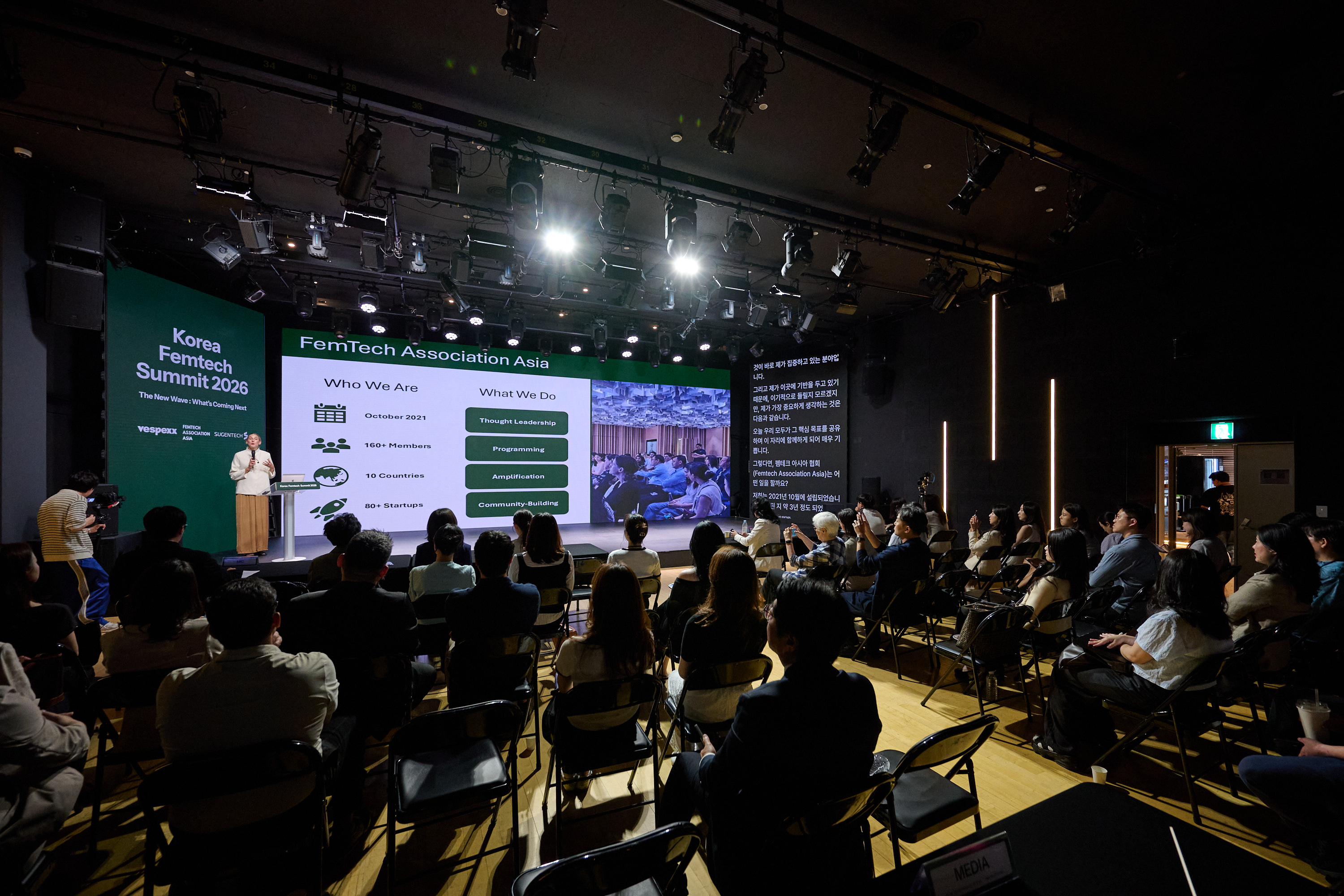
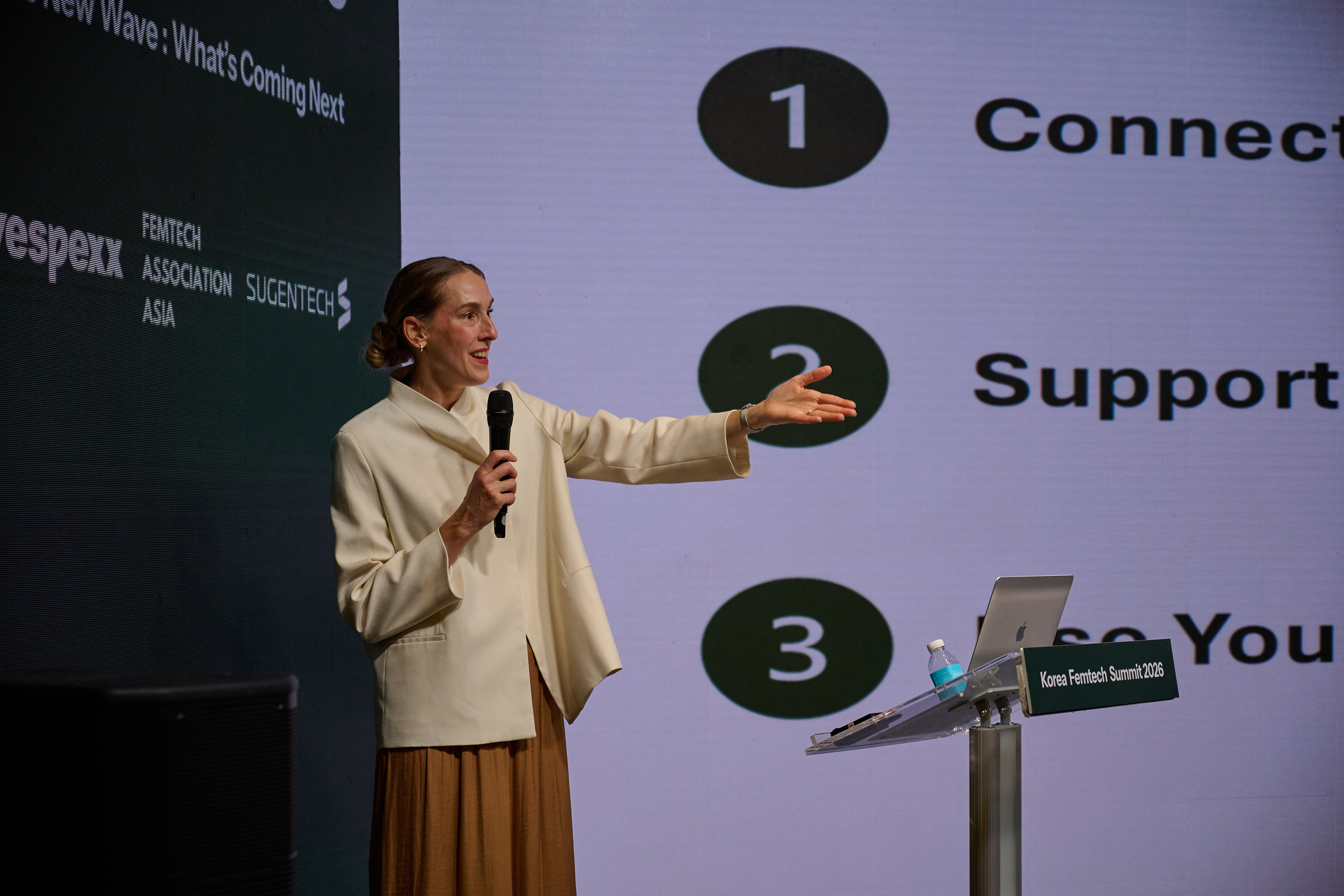
Lindsay Davis, founder of FemTech Association Asia, opened the sessions by widening the frame. Femtech isn't "bikini medicine," she argued, but women's health broadly, from the 80% of autoimmune conditions that fall disproportionately on women to how cardiovascular disease shows up differently in female bodies. She laid out the stubborn investment gap, even as evidence shows every $1 invested in women's health can return $3, and made the case for Asia, home to more than 60% of the world's population and some of its fastest-growing digital health ecosystems, yet still underserved. With FAA now representing close to 100 startups across ten countries, her message was that this is smart economics, not just impact: women drive roughly 80% of healthcare decisions.
Clinician's Perspective: We Need Different Answers
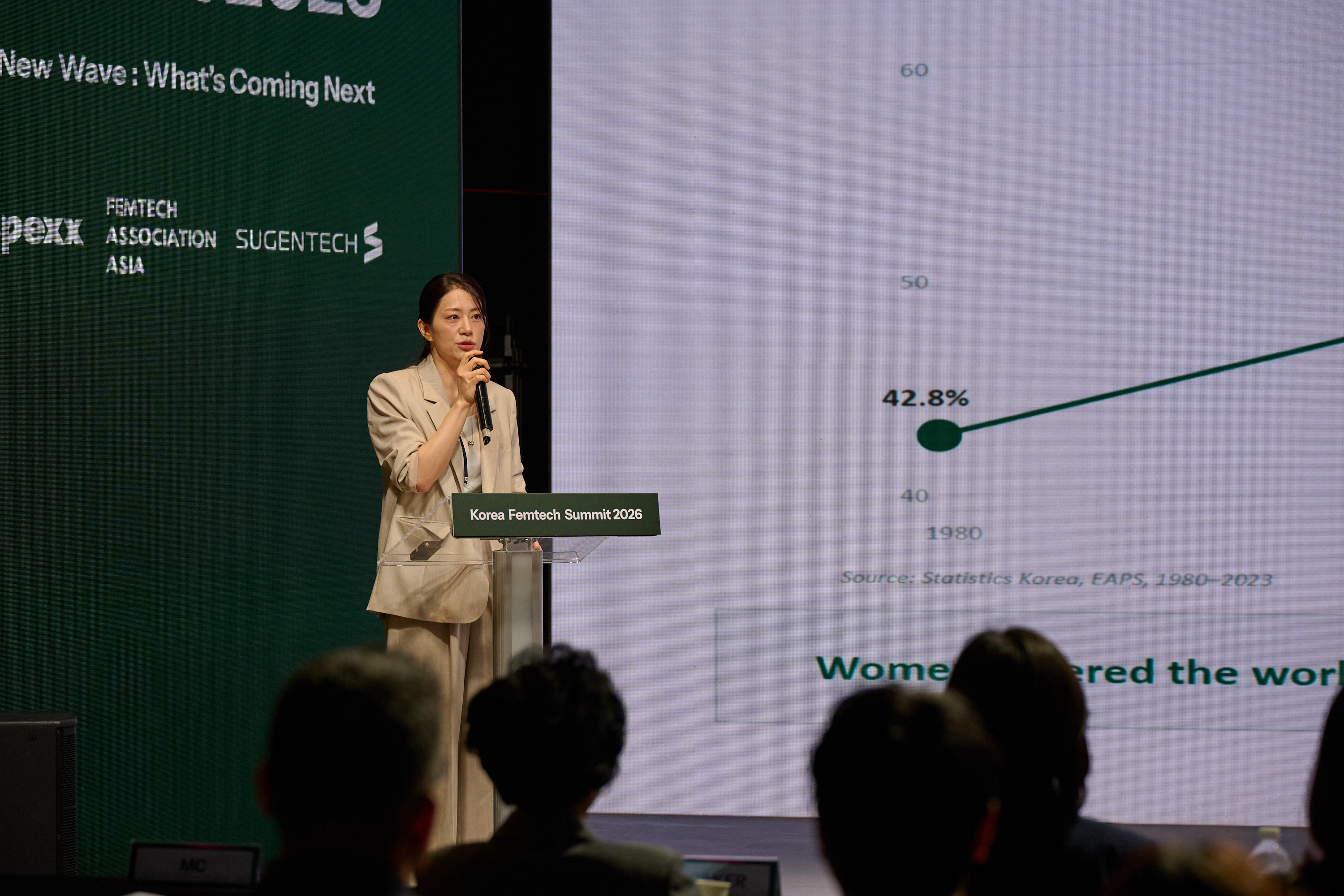
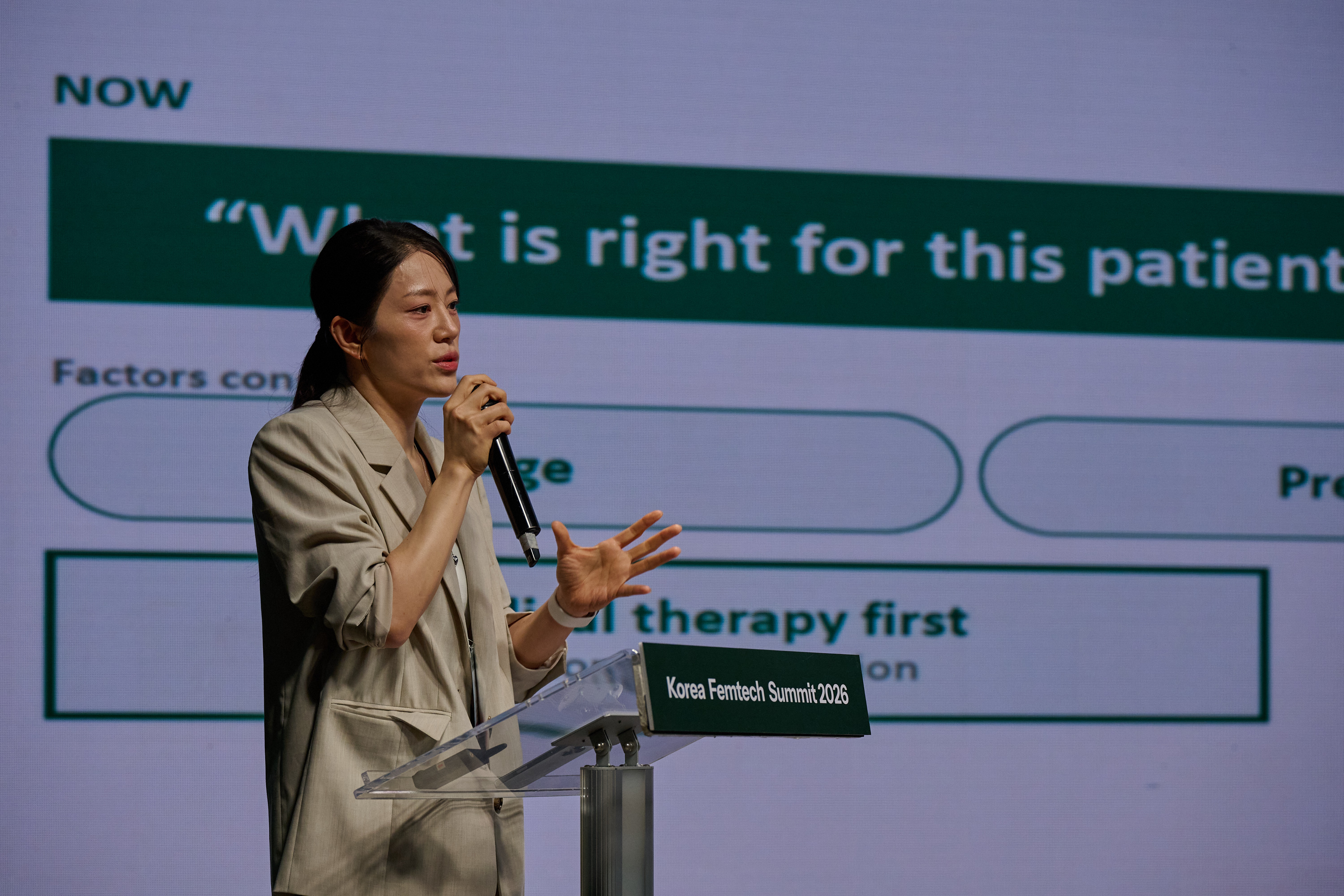
Dr. Juhye Lee, a reproductive endocrinologist at Ewha Womans University Mokdong Hospital, brought the view from the exam room. As Korean women's workforce participation climbed from 42.8% to 63.1% and the average first-marriage age moved from 24.8 to 31.5, pregnancy and health questions got pushed later and later. She's watched fertility procedures rise 38.9% between 2019 and 2023, with over 200,000 performed a year. The deeper shift is in the questions patients ask: fewer arrive only when something breaks, and more come in wanting to understand their own bodies first, asking about egg freezing and ovarian age before there's ever a problem. Care, she argued, has to move from treatment toward prevention and personalization to meet them.
The Next Chapter: From Women's Health to Dyadic Health
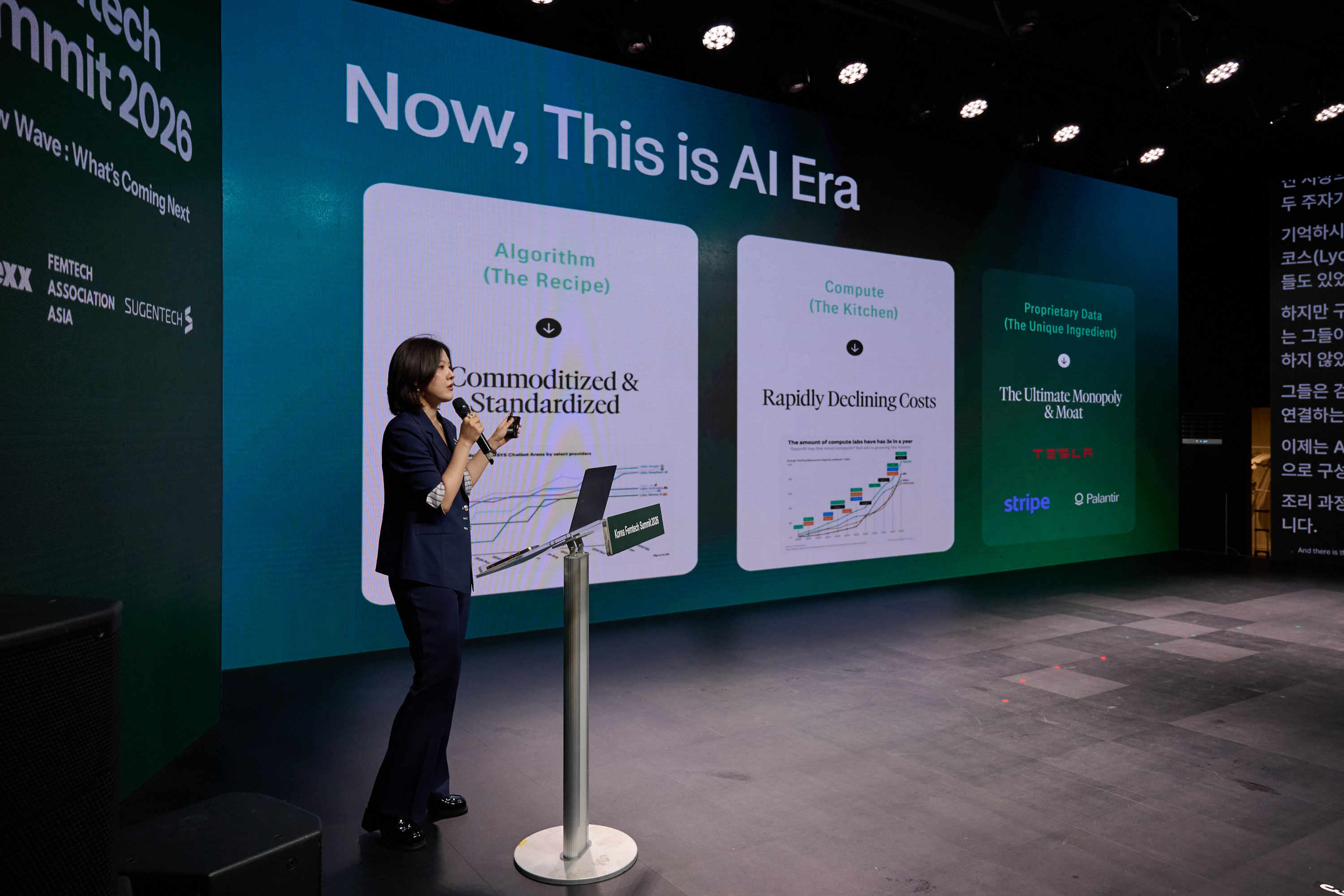
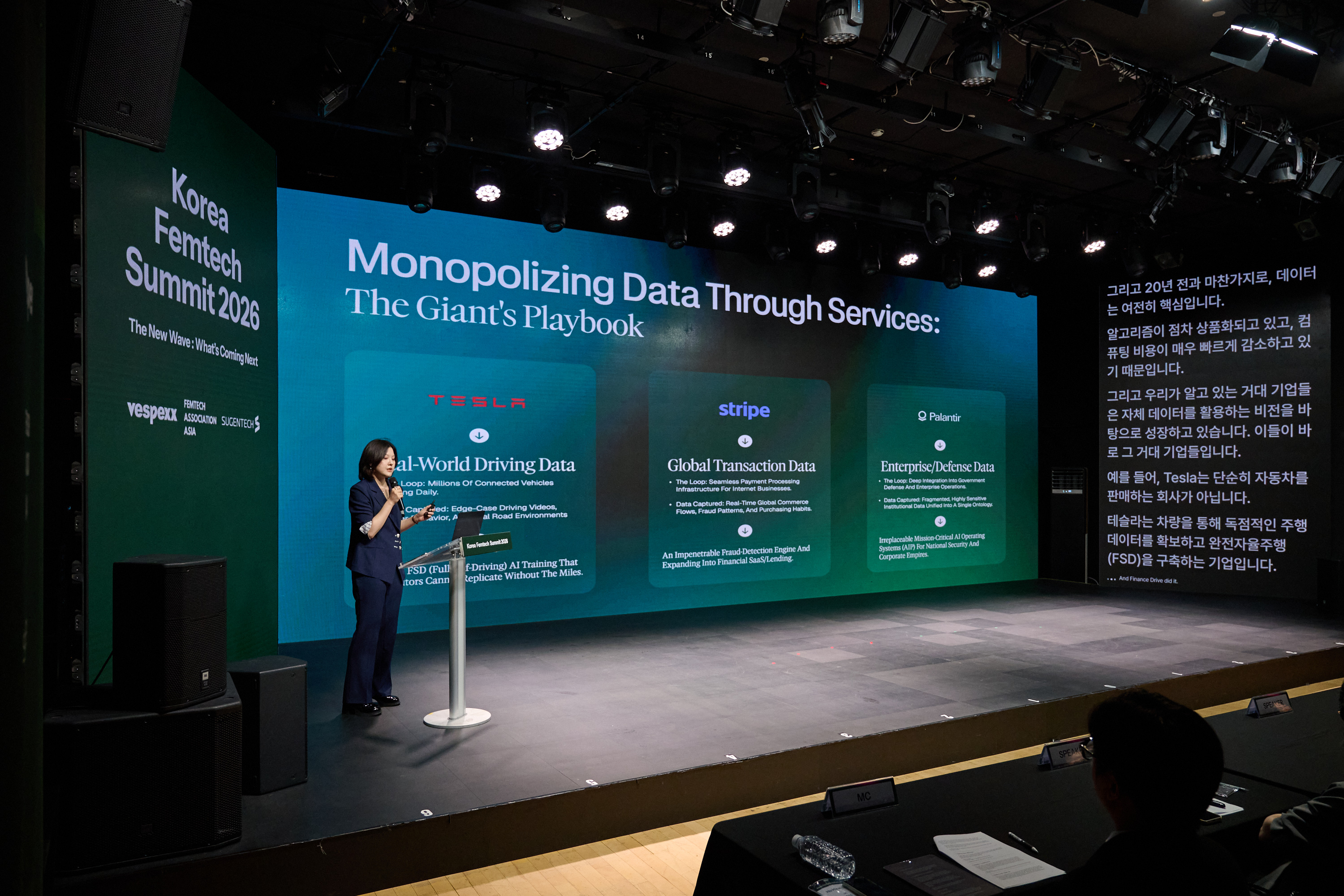
Vespexx Co-CEO Scarlett Joowon Jung challenged an assumption baked into the whole category. Opening with a story about her mother driving herself to the hospital in labor, she pushed back on the idea that every woman must be a superwoman carrying it all alone. The paradox: the biology sits in a woman's body, but the responsibility isn't hers alone. Pregnancy, fertility, and contraception make up roughly half the femtech market, yet 30-40% of infertility cases are male-factor, and average sperm counts have fallen more than 50% in recent decades. Even in menopause, 70% of couples who divorce cite menopause-related conflict. That's the thinking behind dyadic health, Vespexx's model where both partners manage the journey together. Its product, Soonr Health, delivers multi-hormone urine analysis (LH, PdG, E3G, FSH) at home in five minutes, with sperm motility analysis planned as a next step. Hormones, she said, are the operating system of women's health, the source code, and Soonr is building a daily data ontology around them.
The Evolution of Women's Hormone Testing
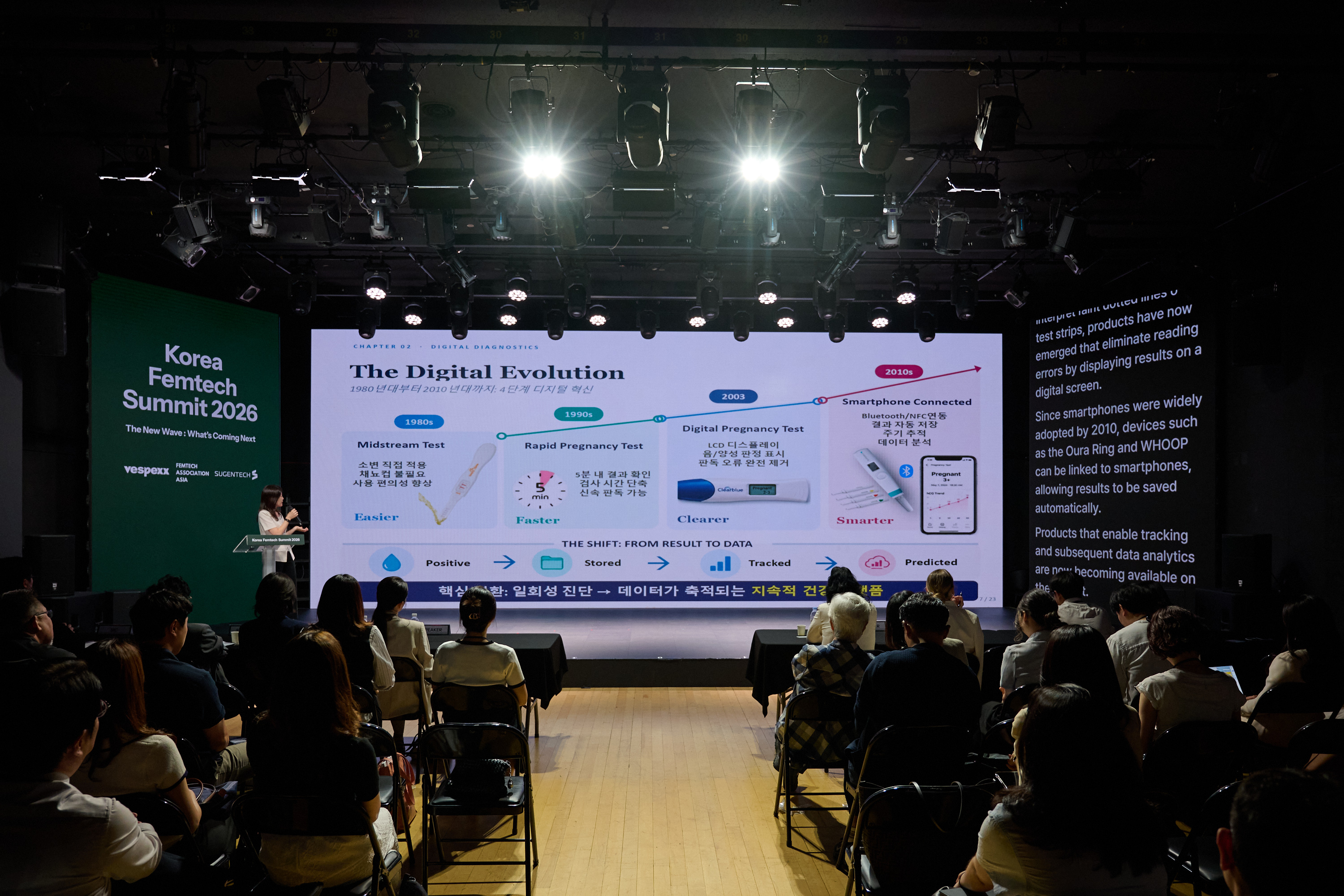
Rimi Lee, Head of the Femtech Center and Principal Researcher at Sugentech, traced 50 years of diagnostics. It began in 1978 with the first at-home hCG pregnancy test, which took two hours to read, and moved through immunochromatography, digital displays, smartphones, and now AI. Her core argument: the female cycle is far more complex and individual than a tidy 28-day model, governed by at least four interacting hormones with baselines that differ from person to person. So the field has to move in one direction, measuring more hormones and interpreting them more intelligently, from naked-eye reading toward AI-assisted analysis and wearables that monitor hormones continuously.
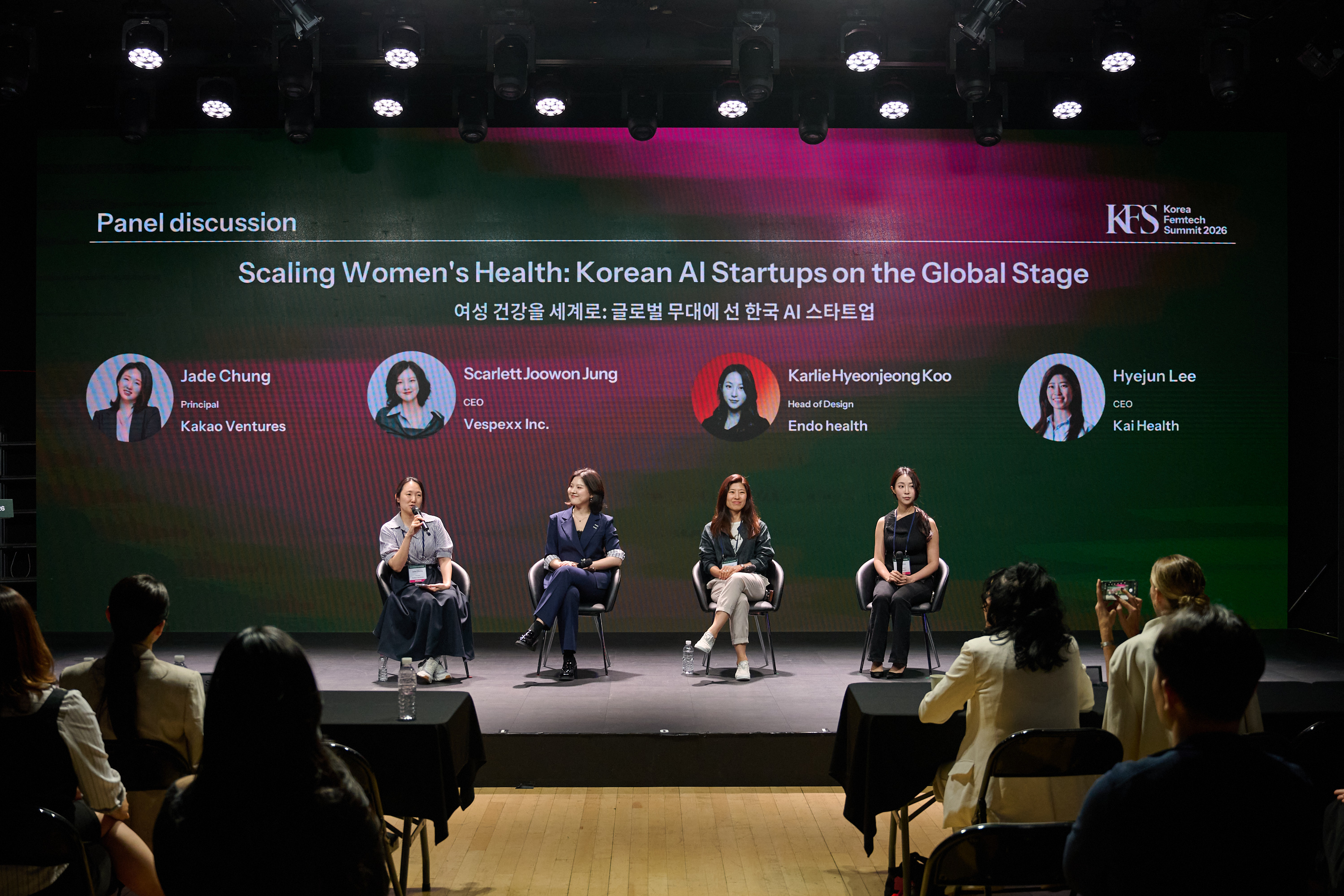
Scaling Women's Health (Panel)
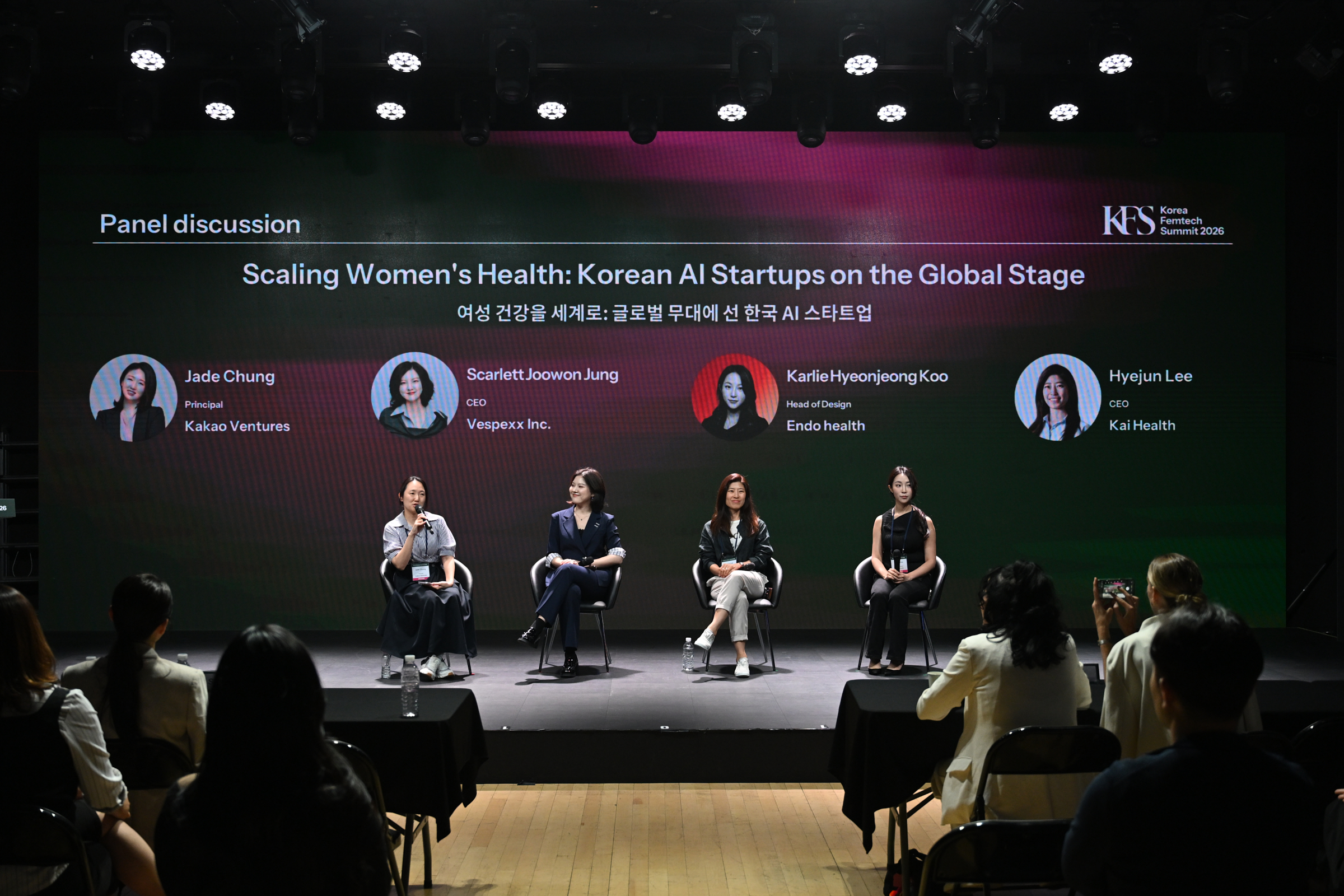
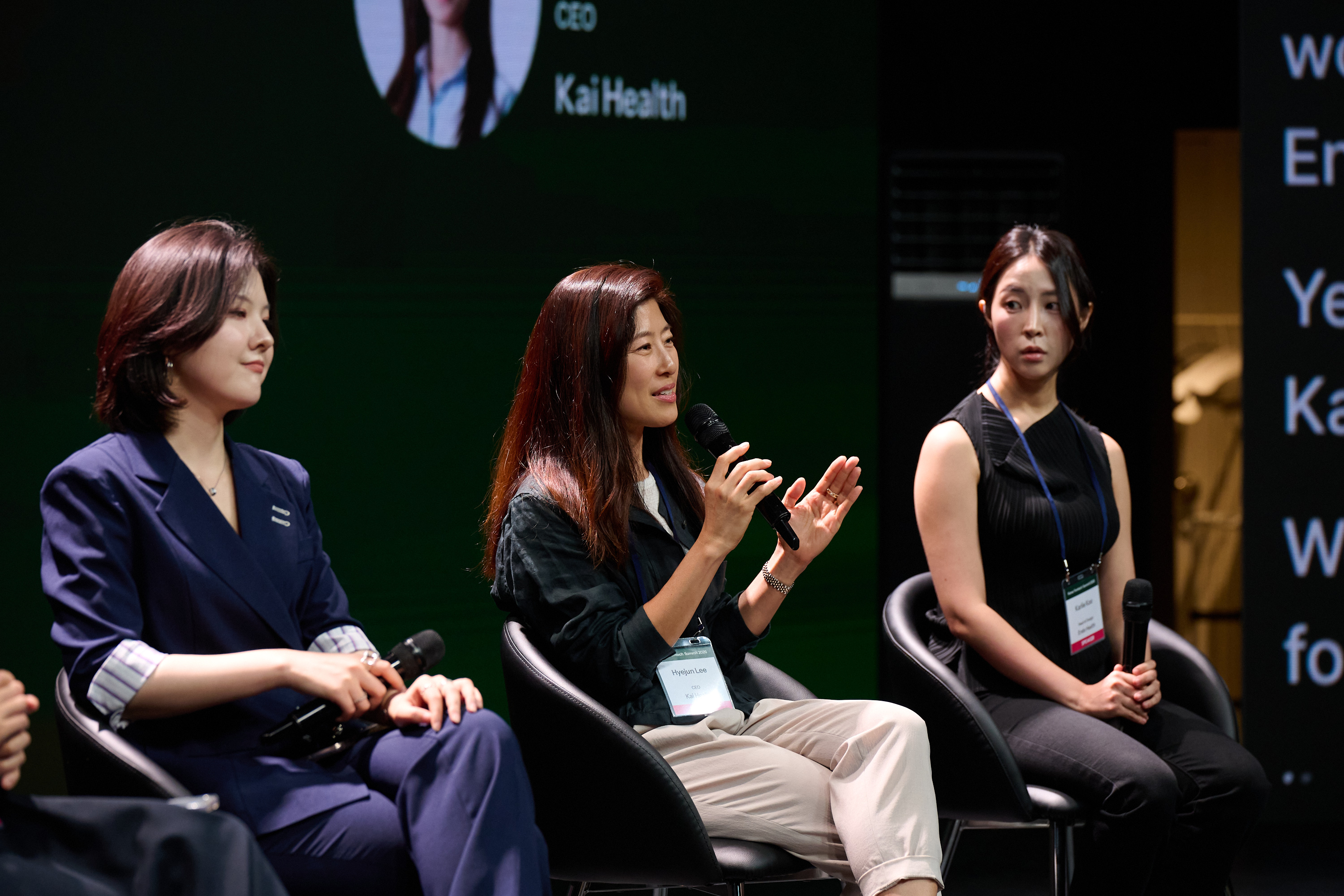
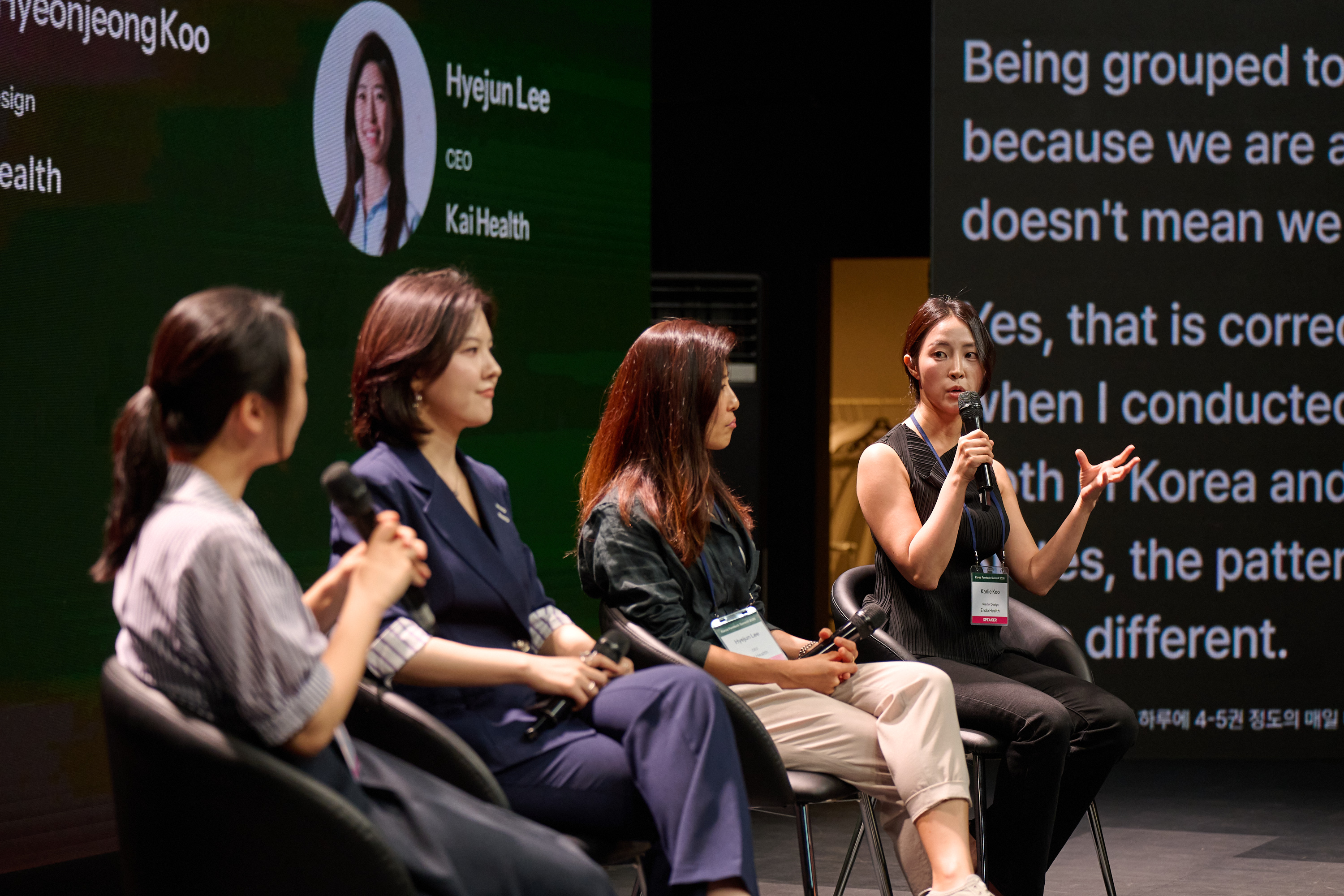
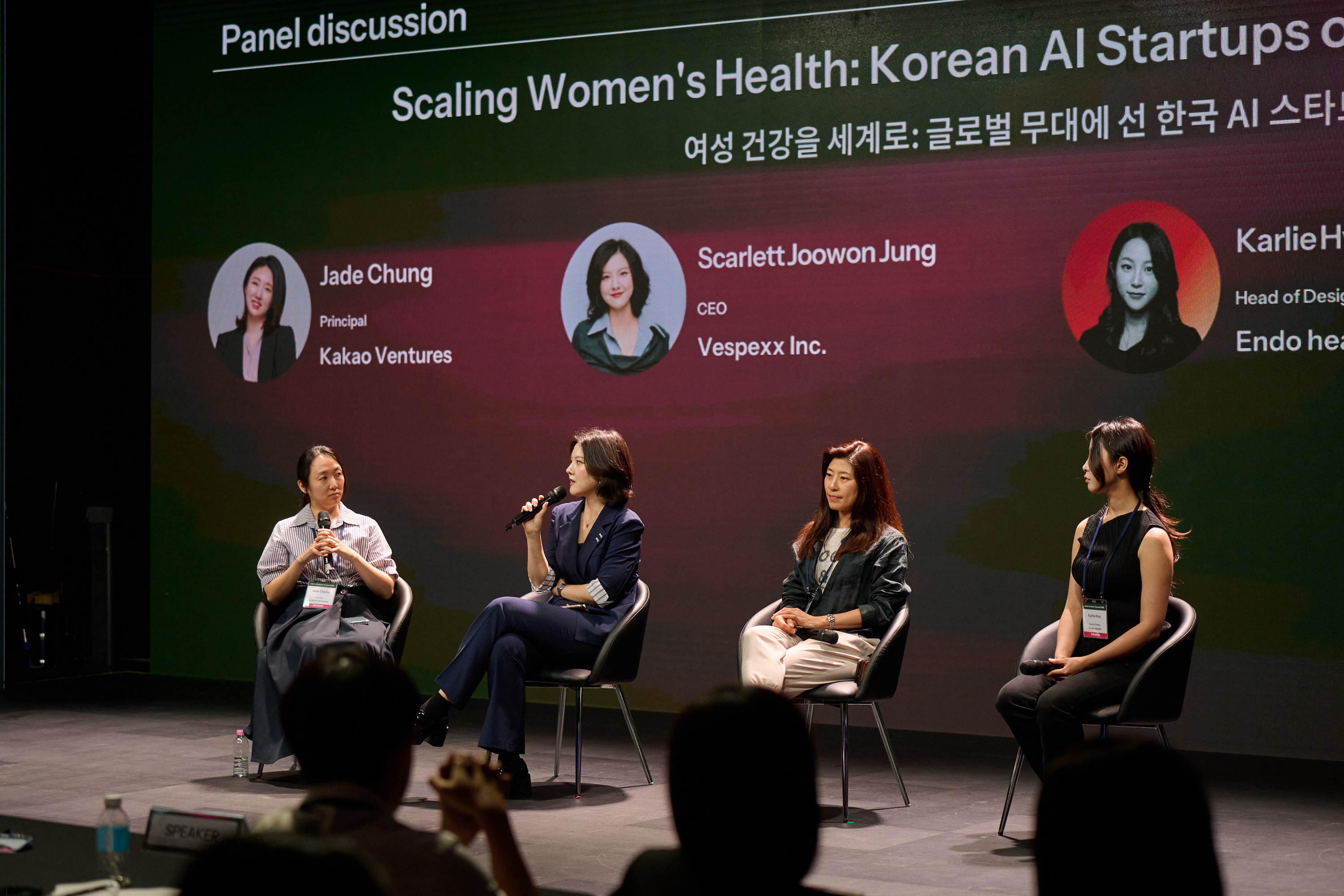
Moderated by Jade Chung of Kakao Ventures, this panel put three Korean founders building for the world on one stage: Scarlett Joowon Jung (Vespexx), Hyejun Lee (Kai Health), and Karlie Koo (Endo Health, a16z Speedrun). Chung named the double burden these founders carry: women's health is chronically underestimated by investors, and taking it global adds a second mountain to climb. Vespexx is building Soonr Health in North America, pairing hormone diagnostics with AI to help both partners prepare for pregnancy under its dyadic health model. Kai Health, whose AI fertility software is cleared as a medical device, has carried its embryo-analysis technology into multiple markets and spoke candidly about the regulatory and partnership hurdles of scaling with hospitals abroad. Endo Health has grown past 200 million organic views with zero paid spend, exactly the kind of distribution strength that global investors, who already favor Korean teams, take seriously. The throughline was obsessive customer understanding, deep localization, and a willingness to go global early.
Japan's Femtech Boom
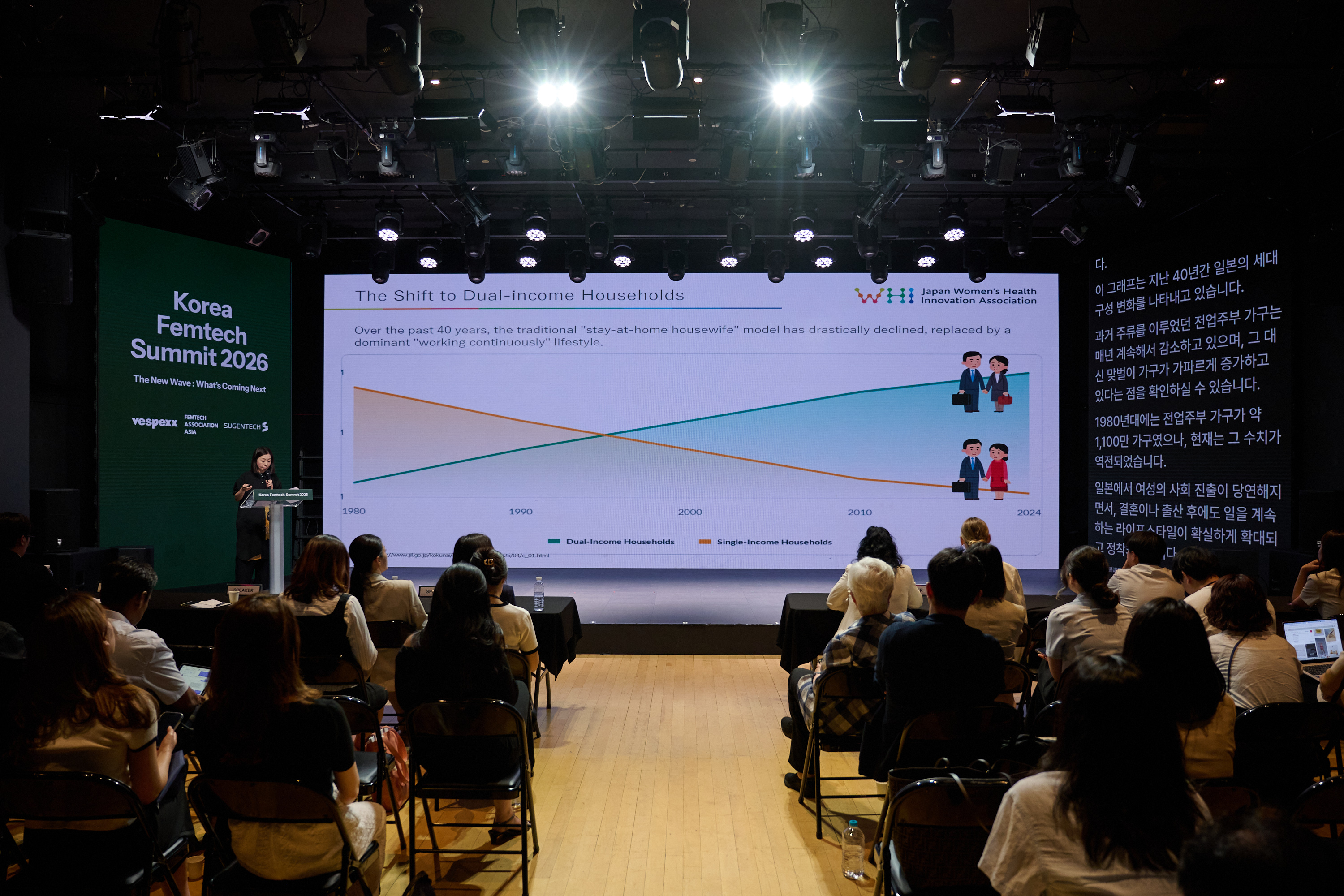
Megumi Kimura, Director of the Japan Women's Health Innovation Association, brought an energizing look at a very different growth engine. Her association, founded in 2021, has already grown to over 4,000 members, and remarkably, 52% of them come from large corporations' new-business or HR teams. In Japan, femtech is surging from the top down: national policy has elevated women's health as a pillar of preventive medicine, ESG momentum is pulling companies in, and established corporations are treating femtech as a core business and organizational priority. It's a government- and enterprise-backed model with its own powerful investment logic, and a sign of just how fast the whole region is moving.
Connecting Women's Daily Life and Life Cycle
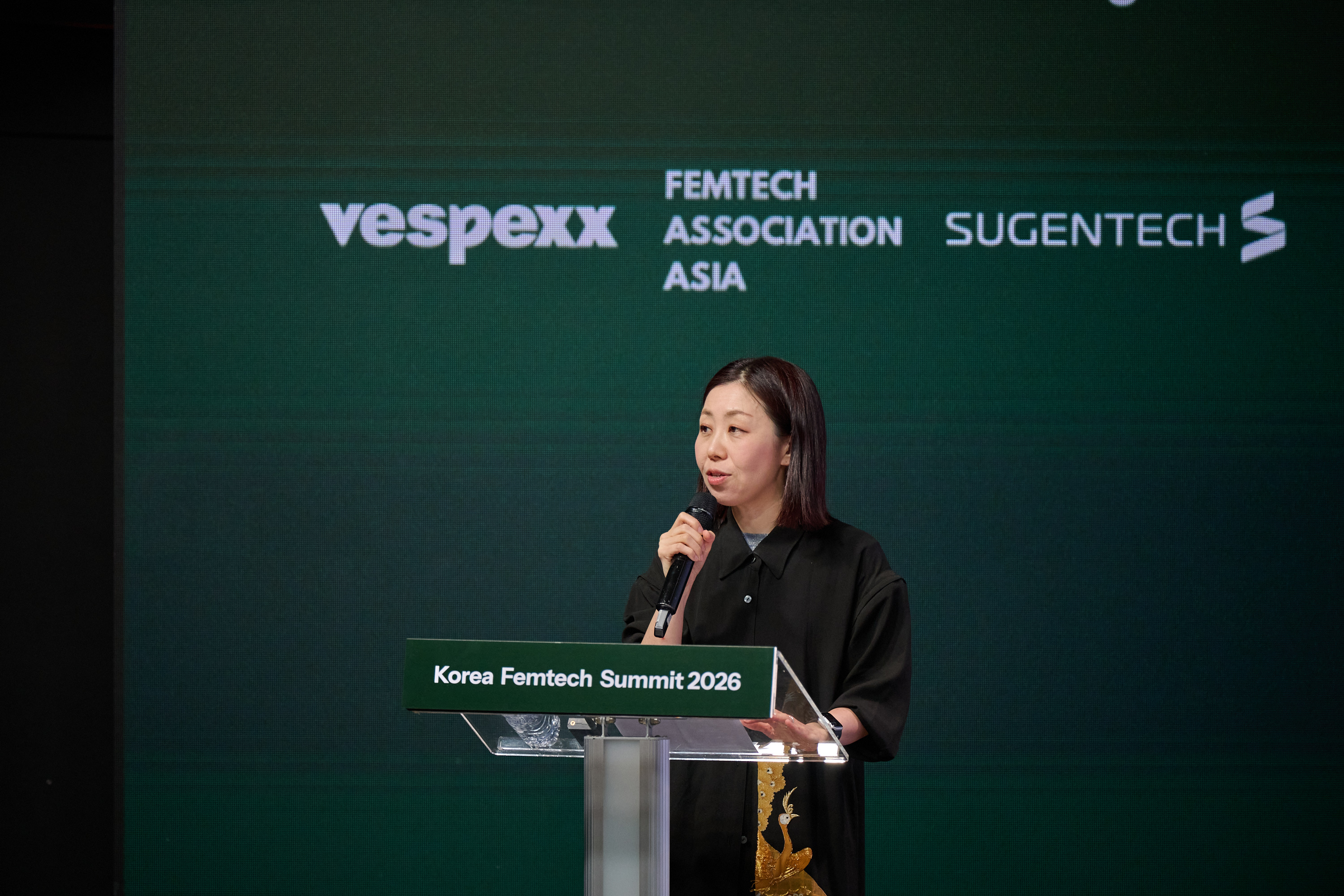
Boram Bae, who leads digital health product at Samsung Electronics, showed what women's health looks like at platform scale. Her emphasis landed on one word, all: women's health isn't a single event or one pregnancy, but a lifelong experience that changes over time. She walked through how Samsung Health already supports it, from cycle tracking to heart rate and HRV signals, and where the team is headed next, toward integrated, life-stage care built across the Galaxy ecosystem.
From Diagnosis to Innovation
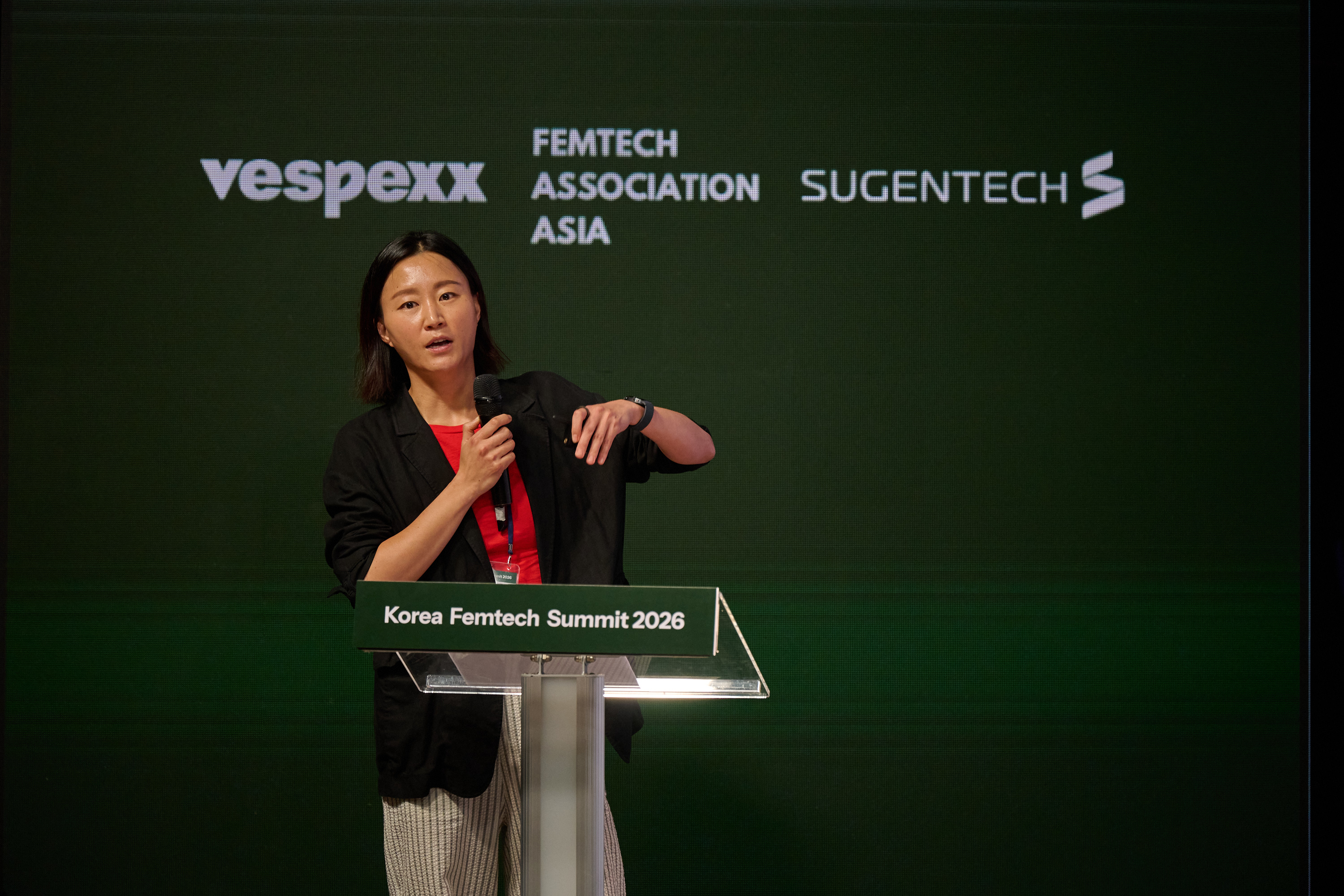
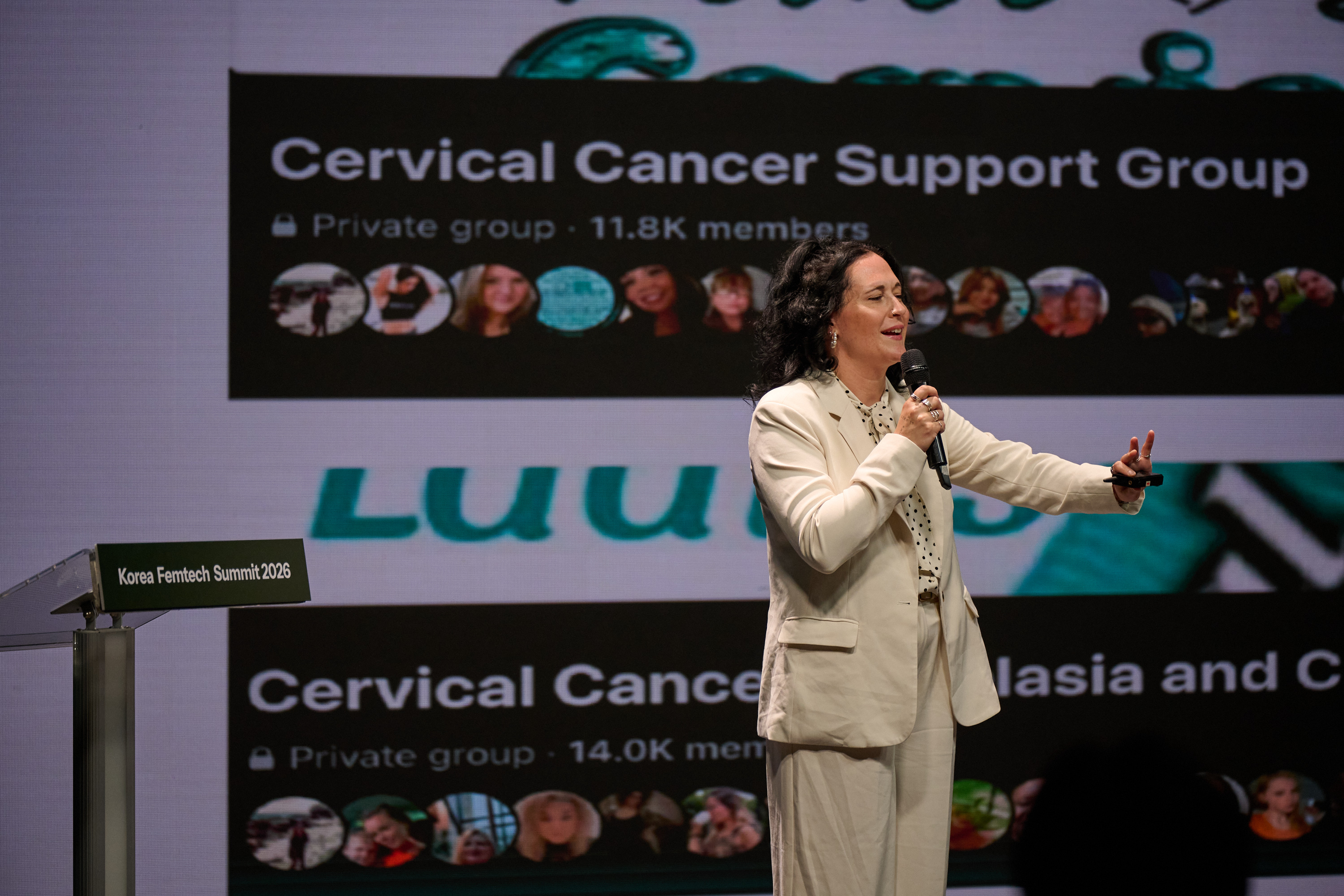
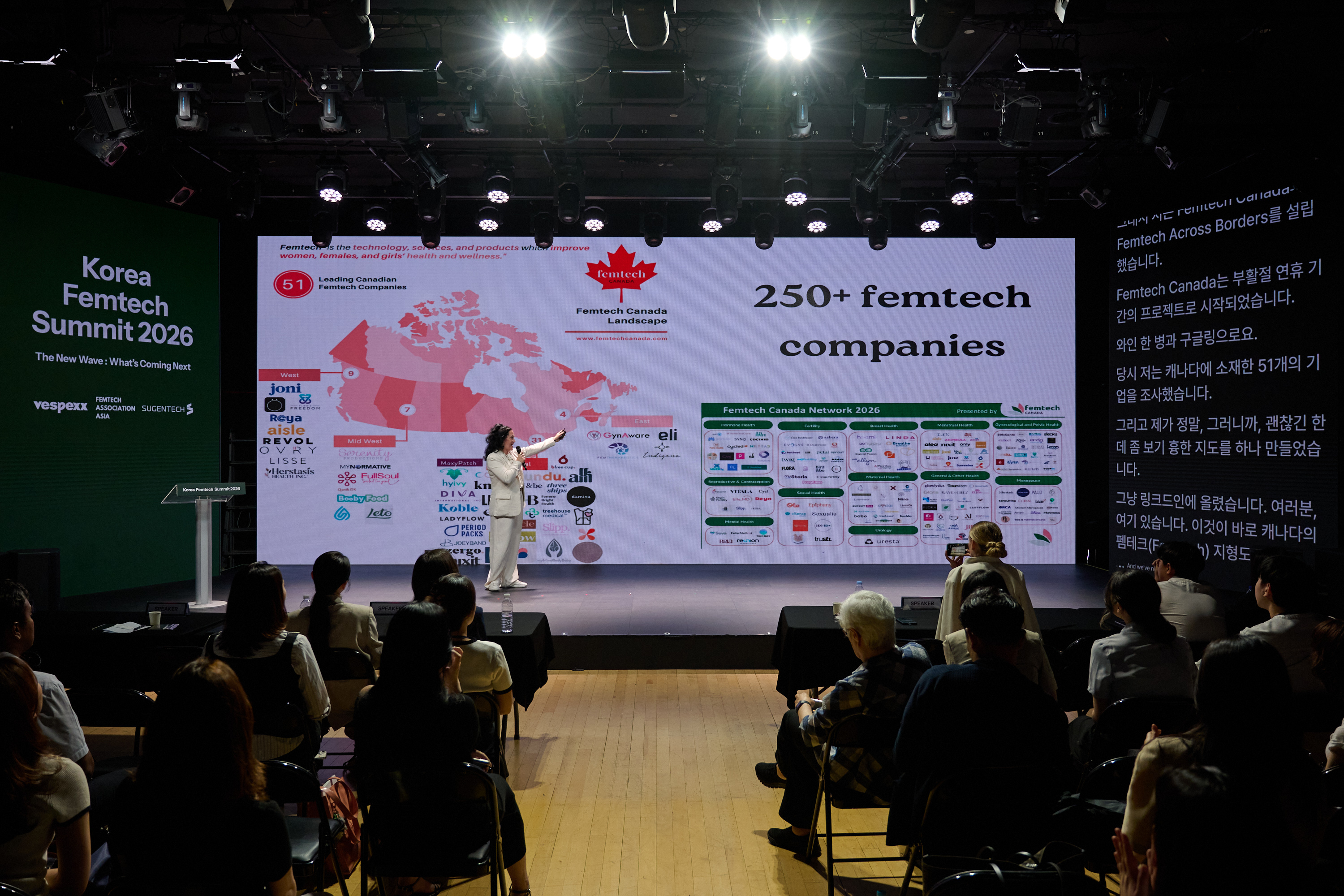
Rachel Bartholomew, founder of Hyivy Health and Femtech Across Borders, closed the sessions with the day's most personal story. She opened with the Amish tradition of "barn raising," a whole community coming together in a single day, because innovation takes a village too. Two weeks after starting in her local innovation ecosystem, she was diagnosed with cervical cancer at 28. That launched her femtech journey and Hyivy's smart pelvic health platform. She spoke candidly about being told she was too risky to fund as a cancer patient, about how investors back founders who look like themselves, and about the stigma that keeps us from talking about menopause and sexual health. Her ask was simple: build with women, research differently for them, and go home and ask your mother about her menopause journey. She's now five years cancer-free.
This is only the beginning
Scarlett Jung returned to the stage to close, and to make it official: Femtech Korea is now launched, a community to connect Korean femtech startups with the global women's health world. Thank you to FemTech Association Asia for co-hosting, to Sugentech, Innerness, and Octolabs for their support, to our speakers for their insight and energy, and to everyone who filled the room.
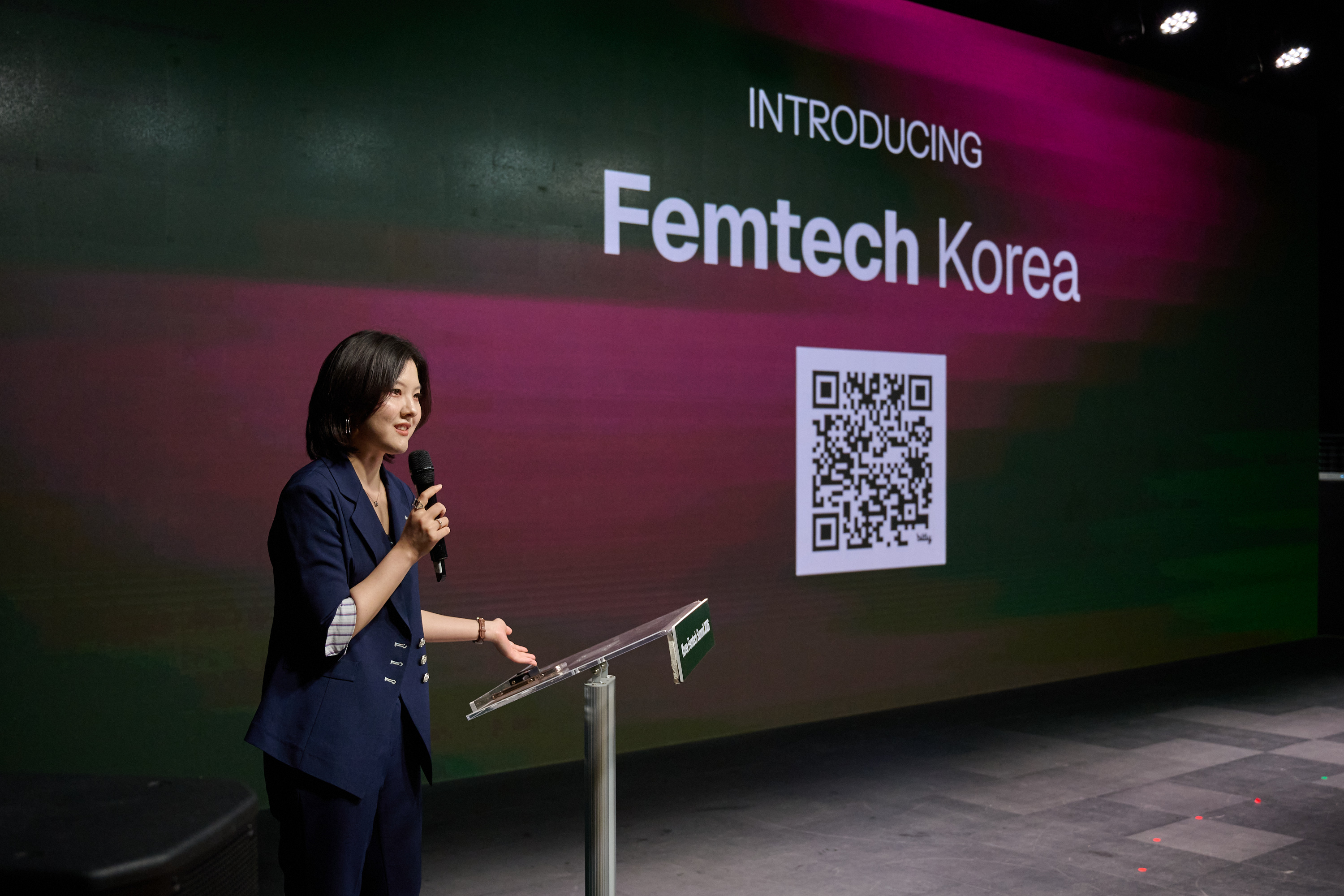
The wave doesn't stop at one summit. Femtech Korea is now open for membership, and planning for KFS2027 is already underway. If you're building, investing in, or advancing women's health, we'd love for you to join us: become a member of Femtech Korea, or partner with us for KFS2027. This is only the beginning.
Join Femtech Korea: https://forms.gle/86f2ZC8TiniFE9VL7