Every satisfying Korea export story shares the same arc: domestic quirk becomes global standard. Skincare did it. Wellness is doing it. Femtech could be next.
Every satisfying Korea export story shares the same arc: domestic quirk becomes global standard. Skincare did it. Wellness is doing it. Femtech could be next.
Korea has a well-documented pattern of turning domestic industries into global cultural movements. K-Beauty is the clearest example. Korean cosmetics exports reached $8.5 billion in 2025, up 15.4% year-over-year, with U.S. sales alone accounting for $2 billion (a 37% increase in a single year). What's notable is that K-Beauty didn't succeed purely on product quality. It succeeded because it exported a system of thinking about skincare: the multi-step routine, the ingredient transparency, the idea that skincare is self-care.
This pattern is now repeating in wellness. Korea's health industry exports hit $20 billion by Q3 2025, growing at 12.5% year-over-year. For context, that's roughly six times faster than Korea's overall export growth rate of 2.2%. Companies like CJ Olive Young, which played a central role in scaling K-Beauty internationally, are applying the same distribution and branding playbook to wellness products.
The logical next category in this progression is femtech.
The global femtech market sits at roughly $60 billion in 2025, with projections reaching $237 billion by 2035 at a 13–15% CAGR. Most of the industry's visibility and venture activity has historically been concentrated in North America and Europe. But several structural factors make Korea an unusually well-positioned market for the next phase of growth.
Government infrastructure. The Korean government allocated ₩11.74 billion (~$8.5M) to femtech programs in 2026, creating direct funding pathways for startups. More significantly, the establishment of a Ministry for Population Strategy in 2024 moved reproductive health from a healthcare subcategory into national policy. The government has also signed memorandums of understanding with venture associations, formalizing investor networks around femtech.
Corporate validation. Samsung has integrated femtech features into its Galaxy Watch platform. CJ Olive Young has launched a wellness vertical. Amorepacific, one of Korea's largest beauty conglomerates, has moved into health-tech. When companies of this scale enter a category, it tends to accelerate infrastructure development, talent acquisition, and consumer awareness simultaneously.
Market conditions. One in five births in Korea now involves fertility treatment, which tells you something about both the demand for reproductive health technology and the population's comfort with medical technology adoption. The digital health market is growing at 15% annually. And the recent legalization of telemedicine has removed a significant regulatory barrier for digital health solutions.
What makes this moment interesting is that these three factors are converging at once. Government funding, corporate entry, and market readiness don't always align this cleanly.
There's an observation worth making here. Despite these favorable conditions, there has been no dedicated forum connecting Korea's femtech ecosystem with the global industry. International conferences cover femtech as a track within broader health or tech events. Regional meetups exist. But there's no recurring gathering specifically designed to bridge Korean innovation with global femtech leadership.
This matters because ecosystems don't develop in isolation. The K-Beauty export story worked because of network effects between brands, distributors, media, and retail partners across borders. Femtech will likely follow a similar pattern, where cross-border connections accelerate growth for everyone involved.
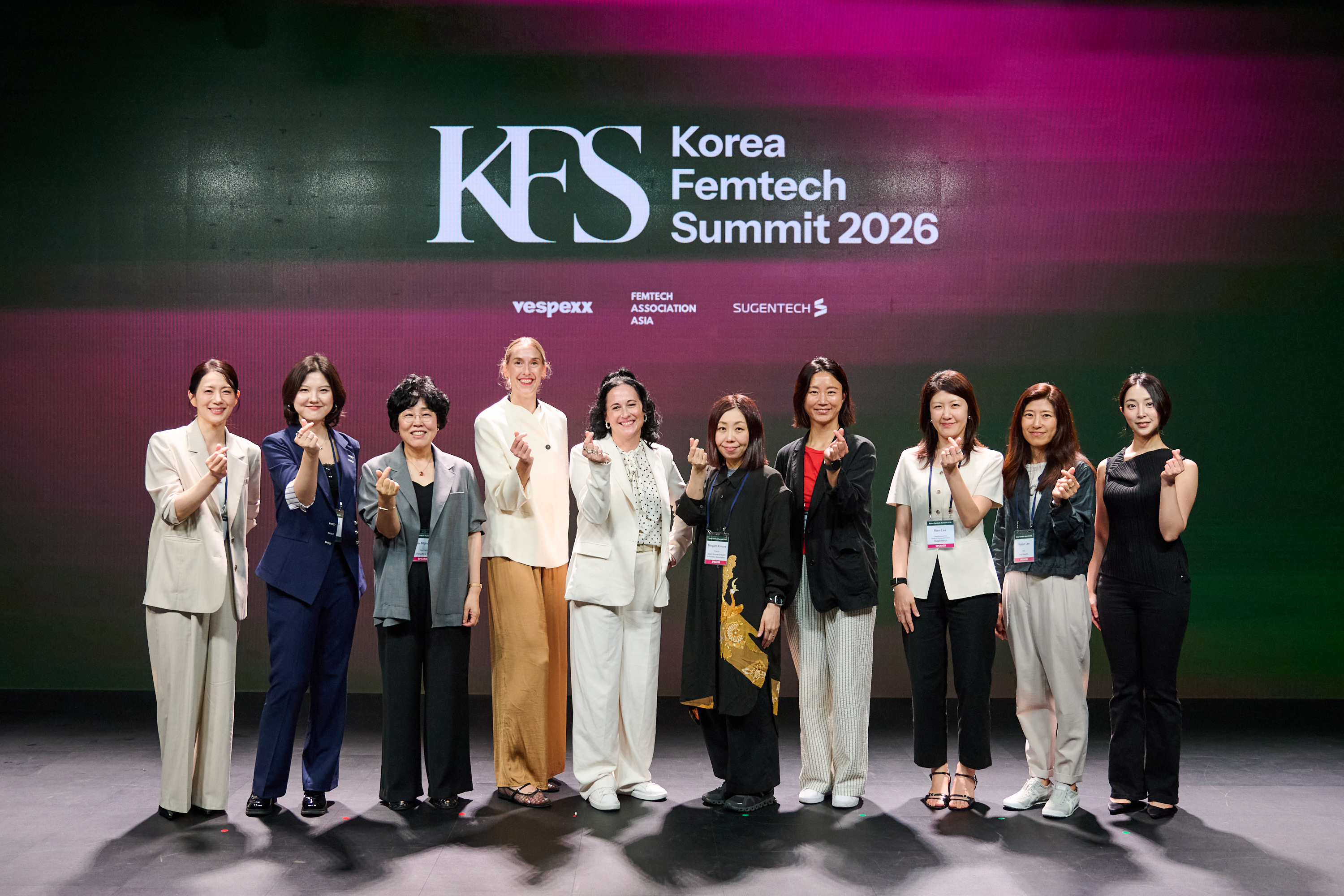
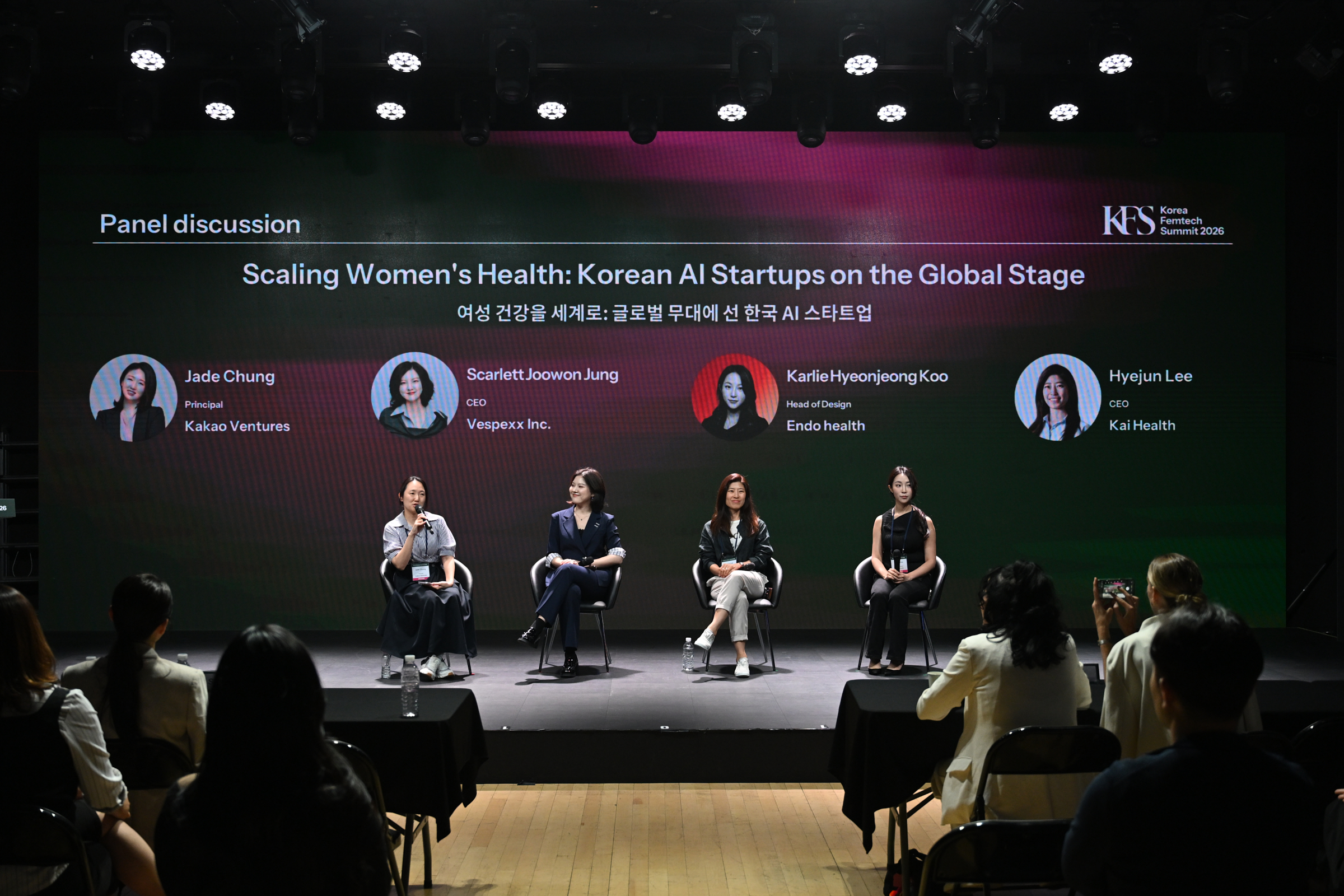
This is the context behind Korea Femtech Summit 2026, an event we're organizing in Seoul this June.
A bit about us: Vespexx is a subsidiary of Sugentech (KOSDAQ: 114530). We operate Signaling, a couples-centric femtech app with over 750,000 users across Korea, the U.S., and Japan, and we're building Soonr, a preconception health optimization platform paired with Sugentech's FDA-listed hormone tracking hardware. Our position within the ecosystem gave us visibility into this gap, and we felt a responsibility to address it.
The summit theme is "The New Wave: What's Coming Next," with sessions focused on AI-enabled precision diagnostics, menopause and midlife health, couples-centric approaches to reproductive wellness, and women-first longevity. We're expecting 50–80 attendees, intentionally kept small. The format is a half-day of sessions followed by networking. The goal is substantive conversation, not scale.
Korea's entry into global femtech feels less like a question of "if" and more like a matter of timing and coordination. The structural pieces are largely in place. What remains is the connective tissue between domestic innovation and global markets.
For founders exploring APAC expansion, investors evaluating the femtech landscape, or researchers interested in cross-border collaboration, Korea is worth paying close attention to. The same forces that turned Korean skincare into a global phenomenon are now assembling around women's health technology.
We think that's worth gathering around.
Korea Femtech Summit 2026 takes place in late June in Gangnam, Seoul. Early bird sponsorship pricing is available through March 31. For inquiries, contact Amy Kim at jykim@vespexx.com.